Miss Angler
A live digital-product business moved off Wix onto WordPress — 13,000 customers, their orders and their access, carried across without a break.
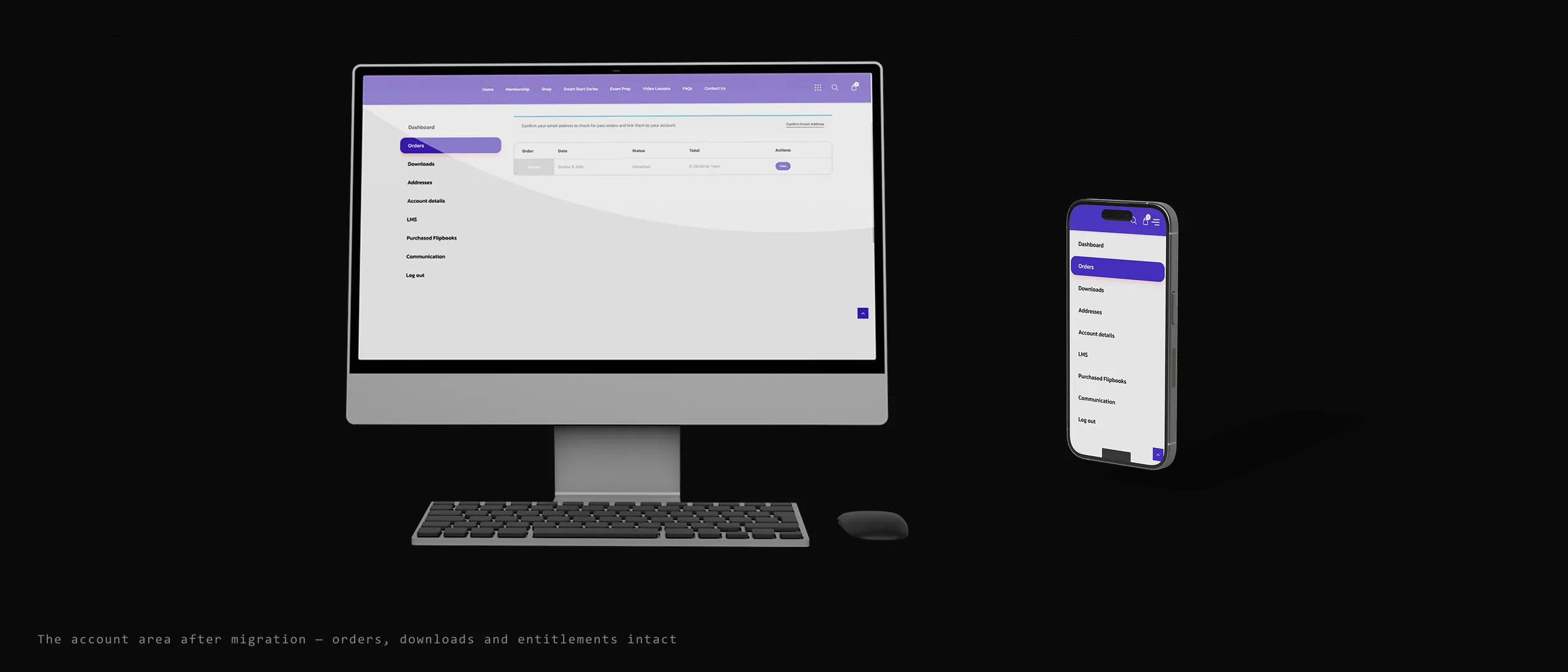
Why it had not moved
The site had outgrown Wix years before it left. It stayed because of the thing that keeps every established store where it is: thirteen thousand customers, their order history, and — because these are digital products — their access to everything they had already paid for. Getting that wrong is not a bad launch. It is thirteen thousand people locked out of what they own, on the same afternoon.
What actually had to move
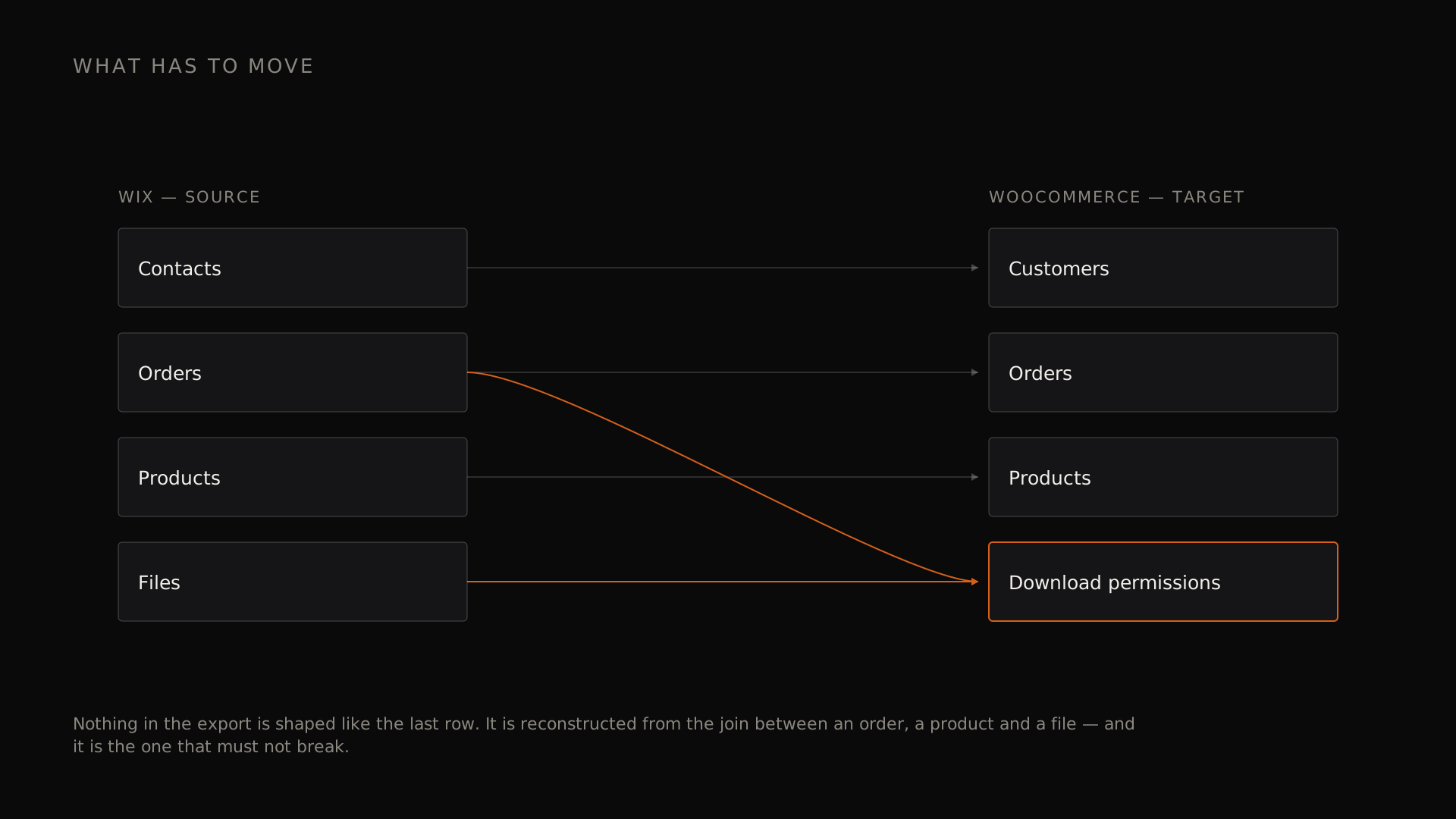
Design is the visible part and the easy part. The work was the data: customer accounts, order history, and the entitlements linking a person to the files they had bought. Passwords cannot be carried between platforms, so the account experience had to be planned around that rather than discovered on launch day.
Migrating a shop that never closes
Orders keep arriving during a cutover, which means the migration is not a copy — it is a copy, then a reconciliation of everything that happened while the copy was running. Verified against source counts before switching, not after.
Holding the rankings
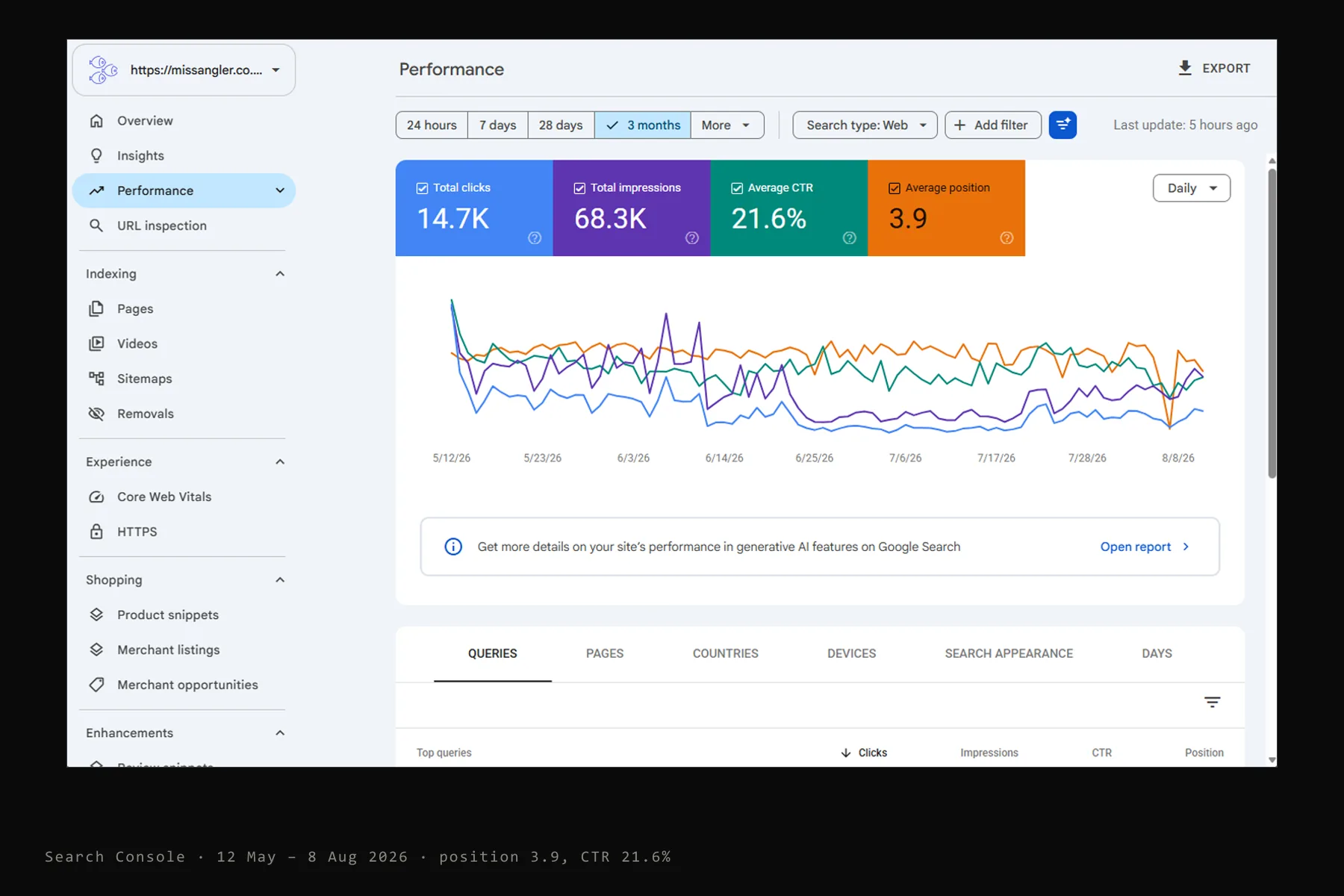
Organic traffic is where migrations die quietly, usually months later, usually because nobody mapped the redirects. We mapped every URL and watched performance for weeks rather than declaring success at launch. What we cannot show is a before-and-after: the previous store was self-managed with no analytics or Search Console in place, so no baseline exists. Performance since is strong — position 3.9 at a 21.6% click-through — but that is a different claim, and take the baseline before you start.
Since then
The relationship continues under a service-level agreement: technical management, security, SEO and answer-engine work, and the ongoing maintenance that keeps a WordPress store from becoming someone else’s emergency.
- Migration, design & development — futr
- Ongoing technical management — futr
Bring us a similar challenge.
Tell us what is changing in the business and why now. If we are not the right partner for it, we will say so in the first conversation.