SCAN RF Projects
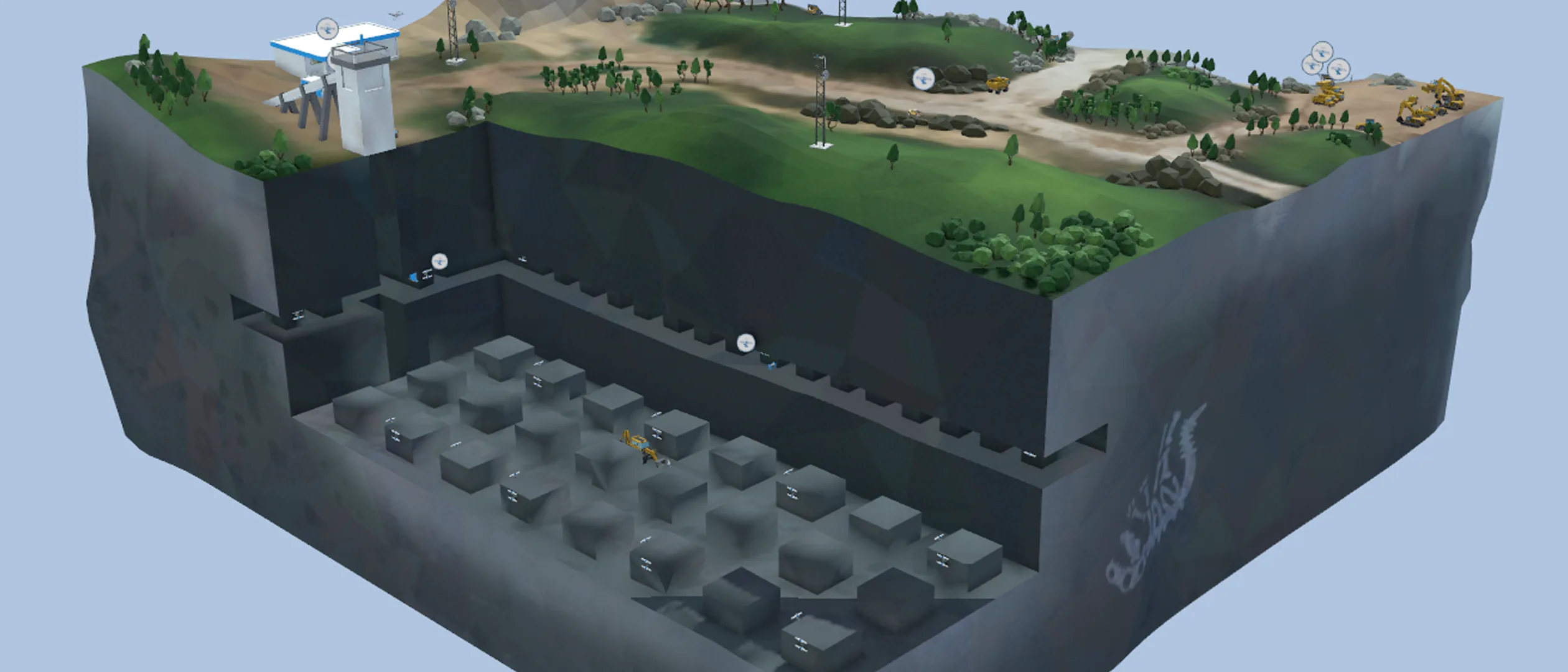
An interactive 3D model of a working mine, showing exactly where a wireless mesh network lives and why it holds.
The problem with selling infrastructure
A mesh network is invisible, distributed and only interesting when it fails. Explaining where it goes and why it holds previously needed an engineer, a whiteboard and an hour — which does not scale to a website, a trade stand or a procurement committee.
Build the mine, then put the network in it
Rather than diagramming the product, we modelled the environment: a working mine, with the network placed where it actually sits. The value of a node is obvious once you can see the shaft it is covering.
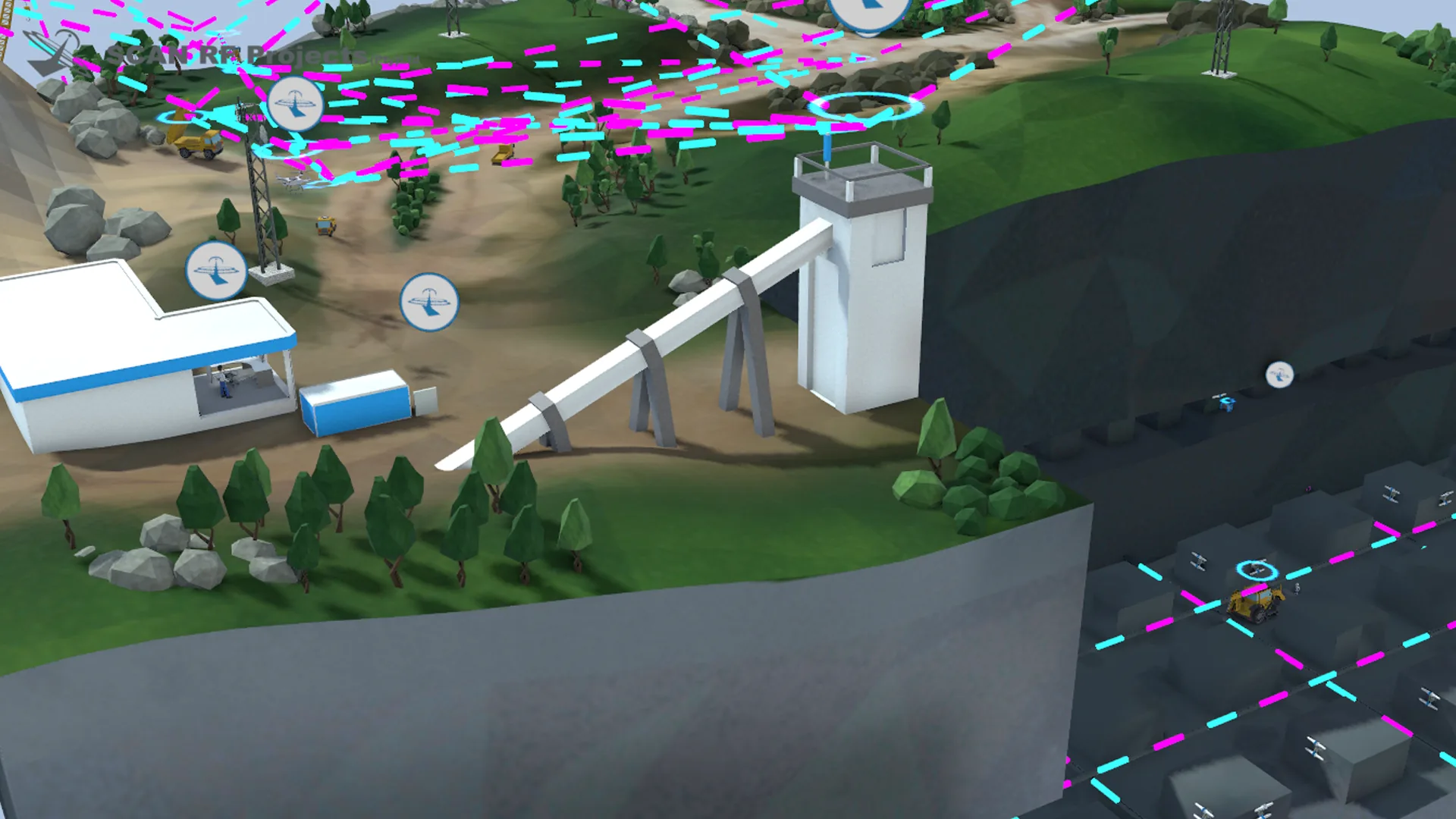
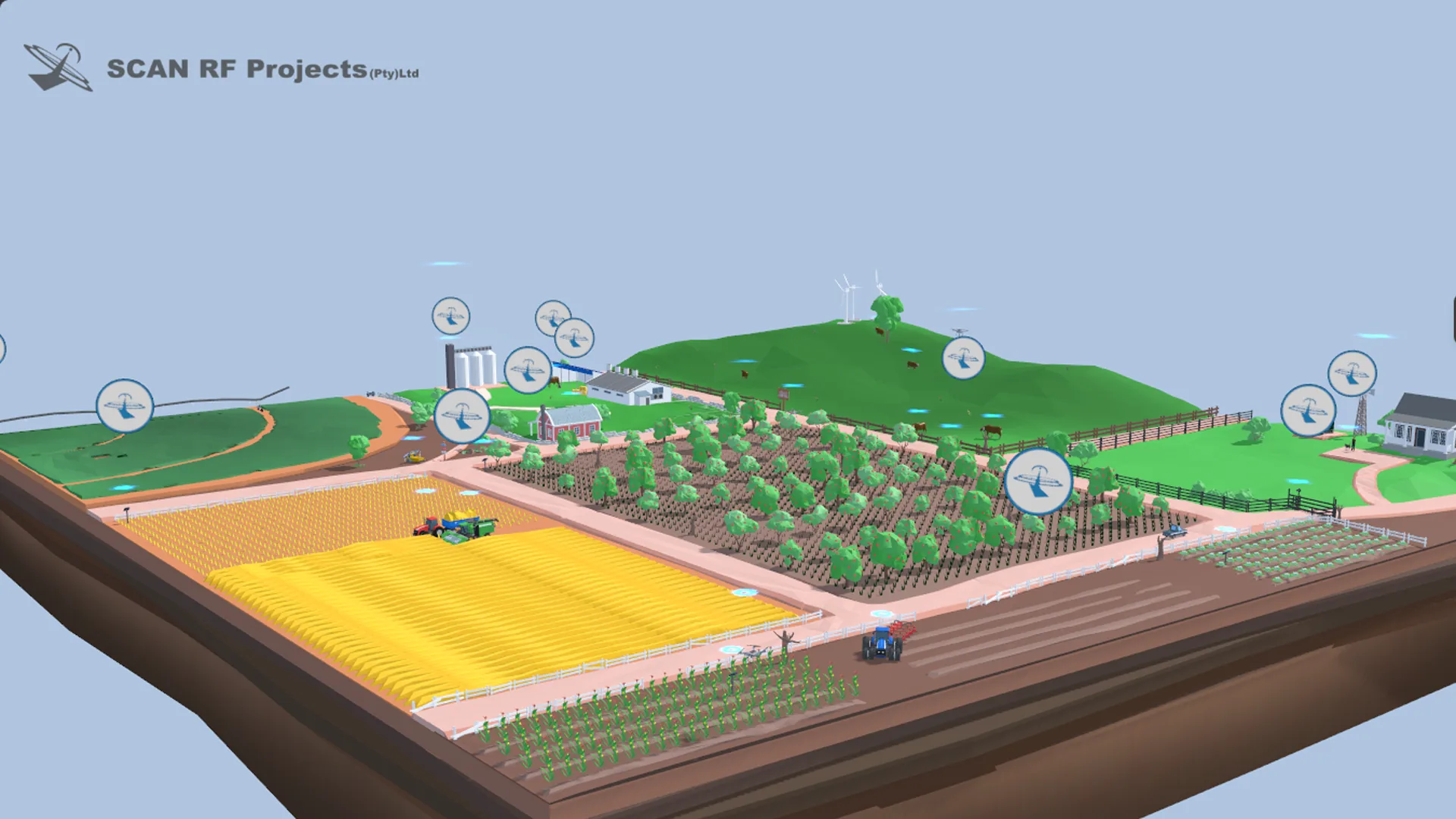
Two sectors, one system
The same approach carried into agriculture, where the connectivity problem is horizontal rather than vertical — distance and terrain instead of rock and depth. One model each, sharing the underlying build.
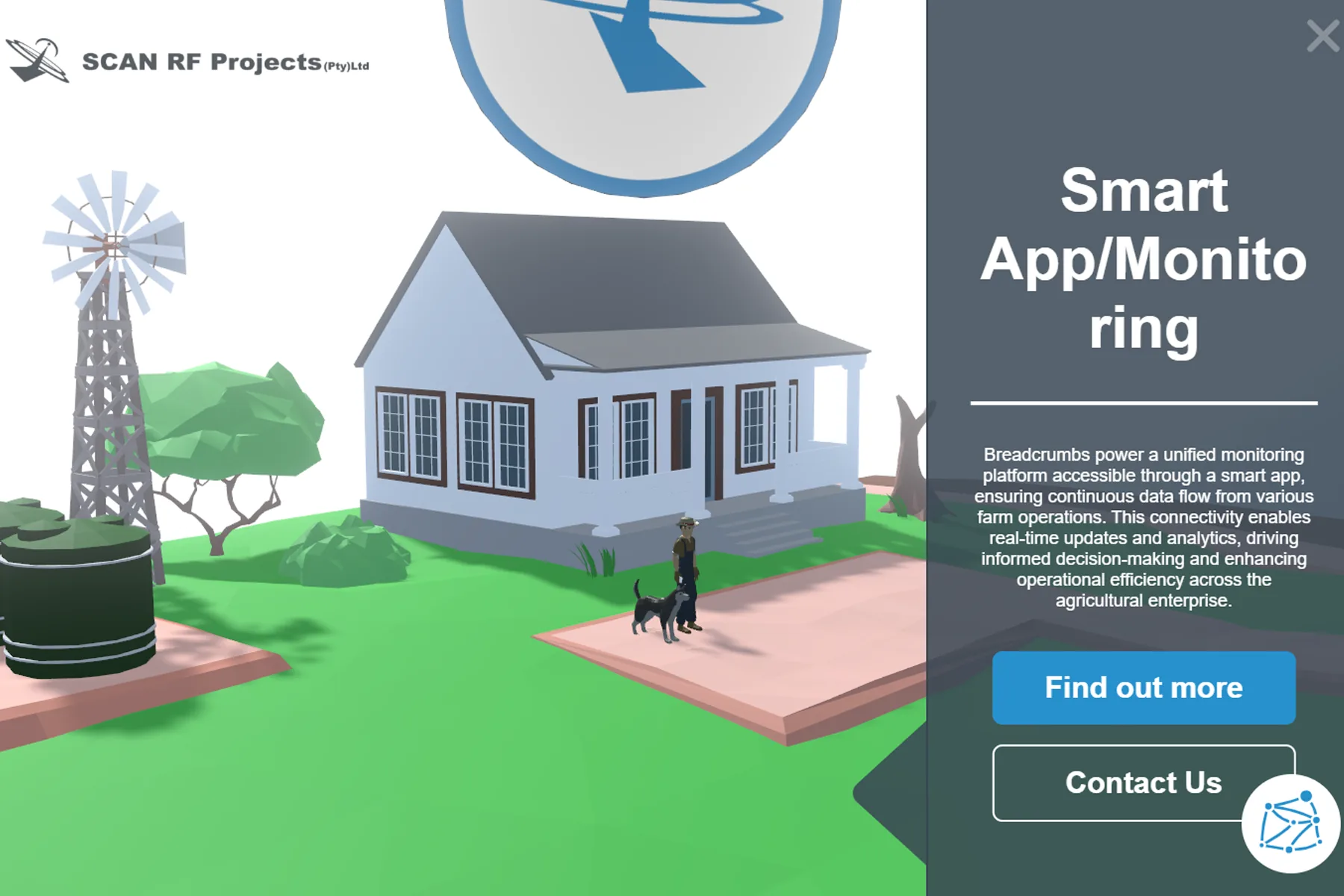
Seven devices, in context
Peregrine, Hawk, Cardinal, Sparrow, JR3, ES1 and Slipstream — presented where each one is actually deployed rather than as a catalogue of enclosures on white.
Why it matters commercially
ScanRF sells into mining and agriculture operations where downtime is measured in production, not inconvenience. Their own project references include Anglo American, Glencore, De Beers and Vale — buyers who arrive technically literate and impatient. A model answers in seconds what a brochure cannot answer at all.
- 3D, design & development — futr
- Client — SCAN RF Projects
Bring us a similar challenge.
Tell us what is changing in the business and why now. If we are not the right partner for it, we will say so in the first conversation.