Get Yachties
A marketplace for yacht crew, built because someone in the family could not find work — and because the way hiring works costs both sides more than it should.

It started as a QR code
My brother is a yachtie and had been looking for work for a while. The first version was a QR code that led to a landing page with his details on it — something to hand over that was not another sheet of paper. That is the whole origin. It is now solving the same problem at a scale neither of us expected.
What it costs a deck hand to get hired
Crew dock walk. Every day, marina to marina, handing printed CVs to whoever will take one, hoping it reaches the person who actually decides. A yachtie spends around eight euros every two days on printing alone — before you count the walking, the season, or the fact that most of those CVs are never read by anyone with hiring authority.
What it costs to hire one
The other side is no better. Captains and owners pay brokers and crew houses for CVs in batches, and end up choosing from whichever batch arrived — which frequently means hiring less experienced crew than the market actually had available that week. Neither side is being served by the intermediary they are both paying for.
The response
Put the two sides in direct contact. Crew list a profile; captains and owners find them by position and location and unlock what they need. That is the whole proposition, and the hard part was never the idea — it was making it simple enough that a captain with ten minutes and a deck hand on marina wifi both get real value out of the same product.
What it has to do to be useful
A directory would not have been enough. Instant messaging and push notifications, because hiring happens in hours rather than weeks. Structured data behind the profile — position and location above all — so search returns the right people rather than everyone. And an employer review system, because the thing captains cannot do today is verify that a CV is accurate, and a review left by a previous employer is the only signal that carries weight.
The architecture
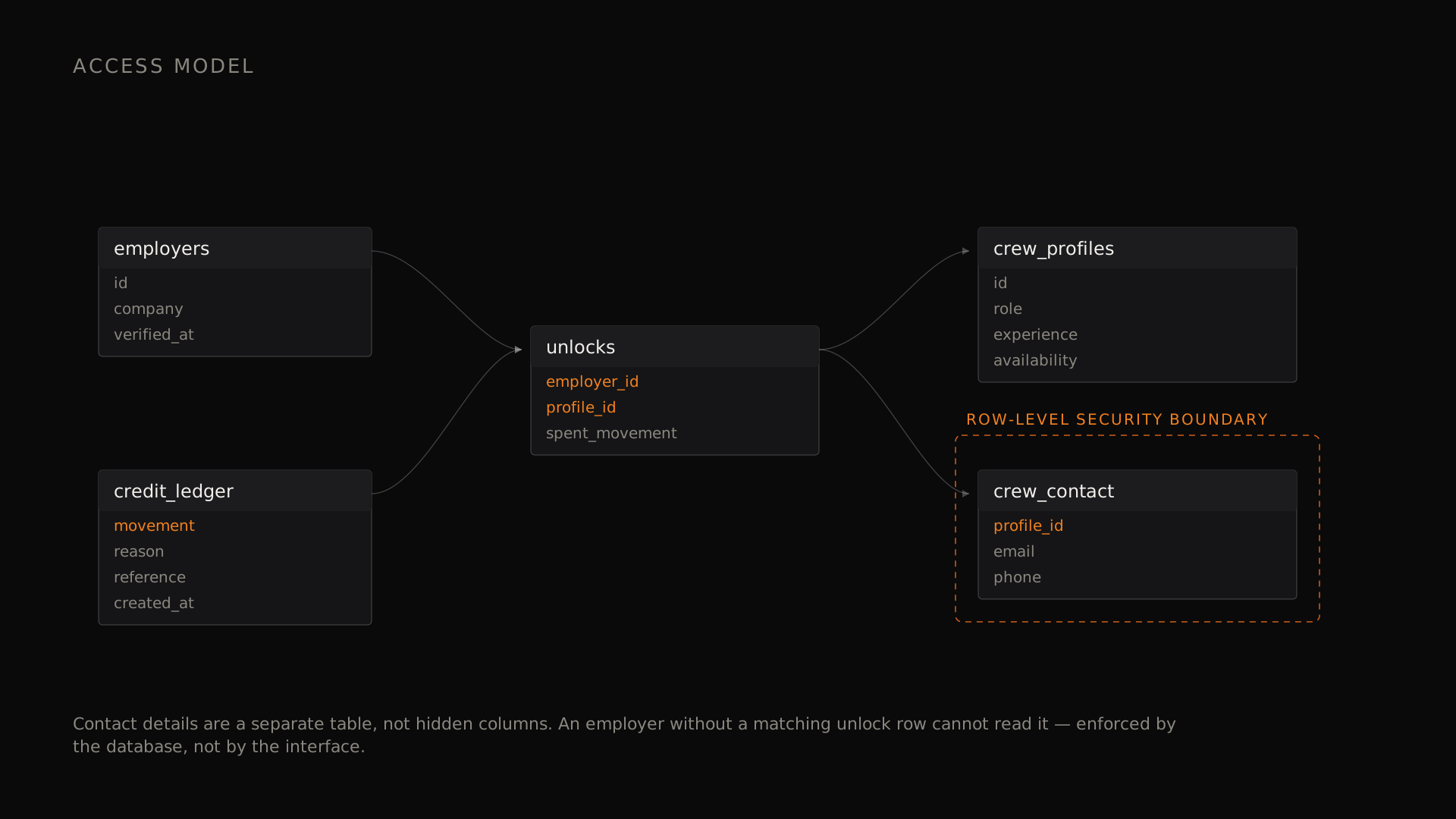
Row-level security so a profile is only ever visible to an employer who has paid to unlock it, a credit ledger that survives partial failures, and an unlock record that is auditable in both directions.
The problem that is not a code problem
Stripe does not let South African businesses collect in foreign currency. For a product whose entire market is euro and dollar denominated, that is not a payments integration task — it is a company structure, banking and accounting question that needs proper commercial and tax advice, and it has taken more thought than any feature in the build. Anyone selling internationally from South Africa will meet this, and almost nobody writes about it.
Where it stands
Live and operating, and every new feature is still genuinely difficult — the intro video crew can now add to a profile being the most recent. That is the honest state of a product rather than a launch announcement: it works, it is used, and the roadmap is long because the problem is real.
- Product & build — futr
- Operated by futr
Bring us a similar challenge.
Tell us what is changing in the business and why now. If we are not the right partner for it, we will say so in the first conversation.